Images of Balence in Art Images of Balance in Art
We usually consider balance as the equilibrium of various elements but if we talk about art and blueprint, residuum is a bit different. Yes, you read information technology right! In general, balance refers to the physical equilibrium of elements around a center point.
But what is balance in art? In art, balance allows the arrangement of elements in such a style that a sense of residuum in the artwork is communicated to the viewer. Nonetheless, in making sculptures, both concrete and visual weight is determined to create balance!
Earlier going deep into the details of balance in fine art, its types, and the examples of radial balance, we will get to know what exactly remainder in art is.
The utilise of artistic elements in the formation of artwork that evokes visual stability is known as the balance in art. It is very important to create rest in art so that one side of the painting does non look lighter or heavier than the other.
If you're interested in art, check out a sample of my other content that helps artists:
- Every Type of Space in Art Illustrators and Painters Should Know
- How Do You Be Artistic?
- List of Creative Skills Every Creative Should Know
- 10 Unique Tips to Become Over A Creative Cake
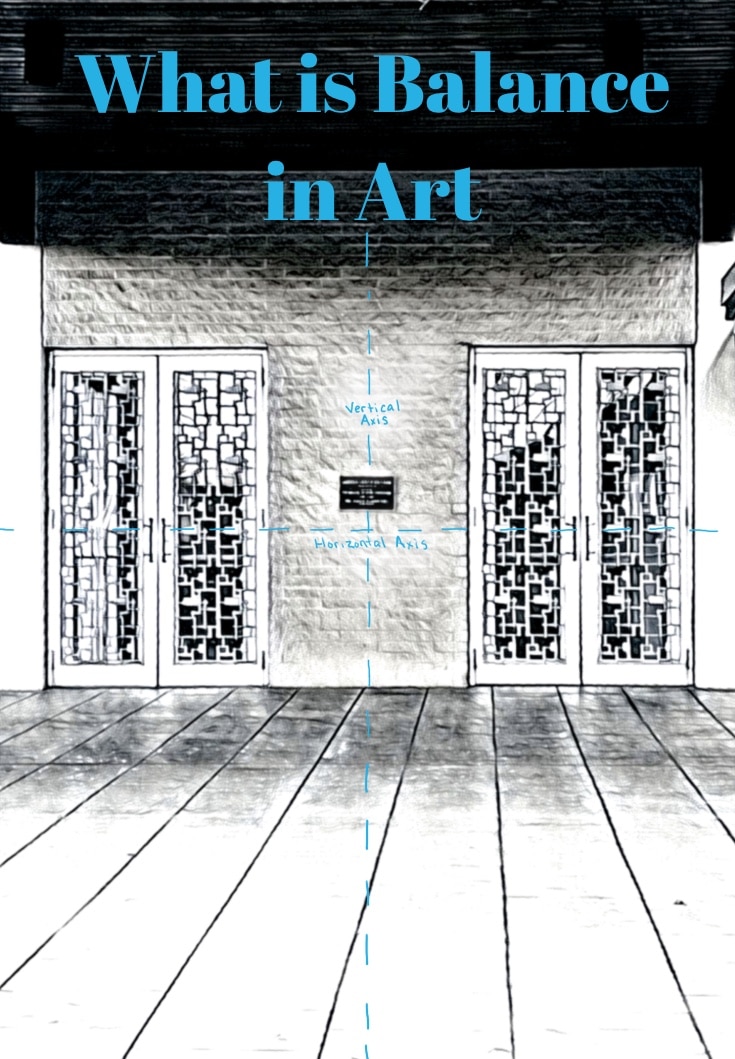
Why Having Balance in Art is Important
If artwork is balanced and weight is evenly distributed among elements, it volition not only expect stable but will give a comfortable feeling to the person who views the artwork. On the other hand, if it is non balanced, the viewer will feel uneasy and the painting will create tension for him/her.
That is why information technology becomes necessary to create rest in your drawings so that they will wait appealing to the eye. This visual weight is non measured using a calibration only information technology is counterbalanced on the axis on artwork that may be horizontal or vertical.
In the case of the horizontal axis, the visual elements are bundled from top to lesser whereas, in the vertical axis, visual elements are balanced on both sides of the axis.
There are various kinds of residue in fine art and their history regarding development and application in the artwork is as long as human history. In today'southward mail, nosotros will hash out everything related to what is balance in art.
Y'all volition get to know why it is important to maintain balance in art and design. Plus, y'all will also discover the kinds of residual, the importance of color balance in fine art along with the examples of radial, symmetrical, and asymmetrical balance.
So, without farther ado, allow'southward have a deep swoop into this guide so that yous can understand deeply about the concept of balance in art.
What Are The Kinds Of Balance In Art?
Practice you know balance is the basic building block of fine art and contributes to an aesthetic touch of visual images? Yes, it is true. There are various kinds of residual in art. The near important ones are:
- Symmetrical Balance
- Radial Symmetry
- Asymmetrical Balance
Allow's take a closer wait at these three kinds of balance and how nosotros can manage all these kinds of balance in our artworks.

Symmetrical Rest
The symmetrical balance, also known as formal residual, is said to be the most common blazon of balance in which the two halves of an artwork mirror each other. In other words, the patterns of forms are repeated systematically.
In the example of applying symmetrical remainder, both parts of the piece of work are equal on the vertical and horizontal axis, looking identical or almost identical.
Through vertical and horizontal centrality, not simply the vertical residual is achieved only left to correct balance is also achieved in symmetrically balanced artworks. It is used to create formality, and stability in the paintings.
The most mutual examples of symmetry are the human being trunk, furniture, cars, clothes, etc. In the field of art and blueprint, this type of balance is applied in secular and religious art and institutional compages including the drawings of schools, colleges, universities, and government institutions.
Symmetrical remainder tin exist farther divided into subgroups. One type of symmetrical residual is the approximate symmetrical balance in which the elements do non mirror each other. Instead, they are like in size and shape, keeping the consistency as well as coherency in the artwork.
This concept was used in early religious paintings. Inverted symmetrical balance is characterized by ii halves of an artwork mirror each other forth the horizontal centrality. The only downside of symmetrical rest is that it is static and sometimes ho-hum to wait at.
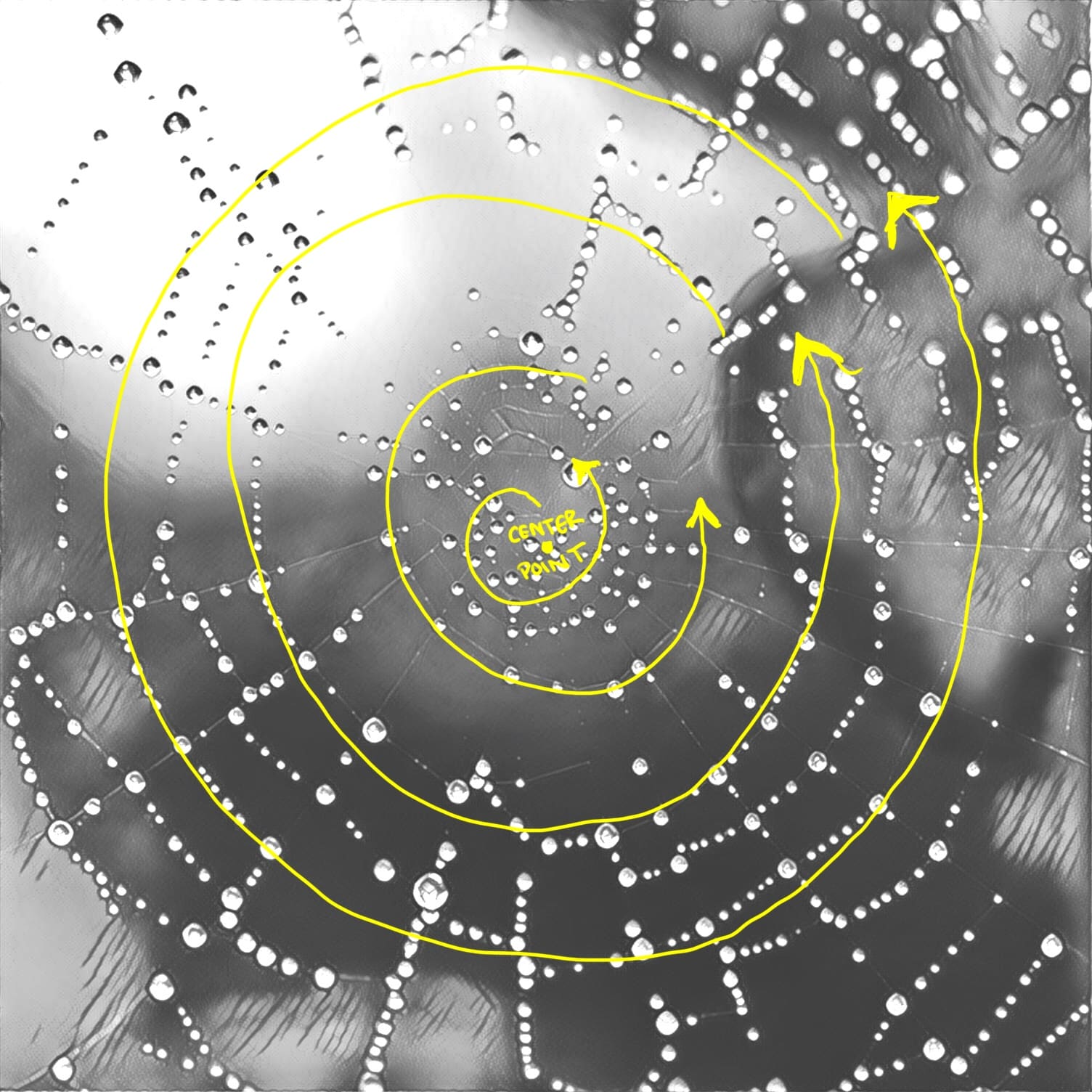
Radial Symmetry
In radial symmetry, the elements of art and design are arranged around a center point. It is also known as formal remainder. It is found in many things. For example, you can see it in the spokes of a bike.

Asymmetrical Balance
In asymmetrical balance, various elements of art are characterized by different visual principles. These may be light and dark shades or full and empty spaces. Although weights on one side of the painting residuum the weights on the other side they are not of the same color, texture, form, shape, or size.
The positive and negative shapes in the artwork are unevenly distributed in the artwork but provide the same comfortable feeling as achieved in the symmetry.
For example, the small elements are placed away from the large elements that are balanced on the other side of the painting.
Take an example of "The Starry Nighttime" by a famous and influential Dutch painter Vincent van Gogh. He made this mural painting by his imagination equally it reflects his observation of the countryside from his window.
This painting balances the elements on the left and right sides although the elements are completely different in shapes, colour, size, etc. In The Starry Night, at that place are trees in the painting that are balanced by the moon.
This type of residual is too known as informal balance and it provides imaginative freedom and expressiveness to the artists. Still, information technology is a bit more hard to accomplish than symmetrical residual and is less organized than symmetry.
It involves conscientious planning but it appears more casual than the symmetrical balance. Asymmetrical residue is more subjective than the other two kinds of rest and provides a dandy diversity in the artwork.
Balance in art can be created by using some variables. These variables may deed as a starting betoken for calculation the concept of balance. The first variable is size.
How to create asymmetrical balance
To create balance, you lot may use a combination of large and modest objects. Other variables are position, texture, and pattern, and color (which volition be explained after in the article).
Note: It does non affair what blazon of balance you apply in your drawings and paintings. Whether it is symmetry or asymmetrical balance, you demand to use and manage the balance in your work. Select the best blazon of balance to employ in your piece of work based on your subject area matter and the message yous want to convey through your work.

What Is Color Balance In Art?
Then, at present yous have come to know what is residuum in art. To create balance in your artwork, yous demand to know about the color balance. Color rest is the procedure of adjusting the intensities of the colors particularly crimson, blue, and green to give neutral colors.
Color plays an important role in painting equally it might be the get-go affair that a viewer notices. Value, saturation, hue, and temperature all are of import to create color residuum in the artwork. If y'all need to mix colors, the key principle of residue lies between warm and absurd colors.
For example, dividing the solar spectrum roughly into half generates warm colors (crimson, yellow, and orangish) on one side and absurd colors (light-green, bluish, and purple) on the other side.
The Iv Characteristics of Balancing Color
There are iv main characteristics of colors that may affect the visual weight in the artwork. If nosotros talk about the value of colors, you can create color balance by using a blend of dark and lite colors.
Because the size, a modest shape of dark color is balanced with a large shape of a lighter tone. The hue of color is adamant past warm and cool colors. Color balance in the fine art can too be achieved by mixing more intense colors with neutral or slow colors and by combining opaque areas with transparent areas.
Note: What is rest in art? To answer this question, most artists deliberately create their paintings unbalanced to brand them look unique and bonny. The best instance of this is the sculpture of "Cherry Cube" that was made by one of the famous sculptors of the 20th century, Isamu Noguchi. The sculpture of Red Cube actually looks off rest. Information technology is ruby-red in colour with white, black, and brown buildings effectually information technology. Information technology is counterbalanced on one corner with the reverse corner reaching towards the heaven. This sculpture creates a feeling of imbalance and tension and makes the viewer uneasy.
What Object Is An Example Of Radial Balance?
As discussed before, radial balance is a type of remainder in which elements radiate equally from a center point. Imagine a stone is tossed in the pond and the ripples are created. This creates a radial balance as the ripples radiate equally around the center.
The best example of radial balance is the famous "Rose Window of Notre Dame" which is considered as a cracking architectural achievement with a diameter of 33 feet. In this artwork, the private sections of the window run equally outward around the middle. If you describe a line through the center point, no matter if it is vertical or horizontal, the window volition exist divided into two equal parts.
Radial residual tin can too be applied in architecture. For case, the circular staircase. The center of the staircase provides a sense of stability and ease of mind. Another example of what is balance in fine art is Mandalas which is more often than not used in Buddhist and Hindu artworks.
What Object Is An Instance Of The Other Types Of Balance?
In symmetrical balance artworks, the design is made in such a mode that similar parts face each other around the center point. Symmetrical balance can be applied in the fine art with the assistance of colors. Imagine a painting of landscapes with a blend of bluish, black, and purple colors all over the painting.
Some other example of what is balance in fine art is a popular painting called "Wooded Landscape with Watermill" made past Meindert Hobbema. This art composition is unified with different tones of dark-green, blue, and orangish. Moreover, at that place is a pocket-sized area of warm color (red jacket) balanced with a larger area of cool colors.
Painting with the reflection of the bridge shown in the water is besides an example of symmetrical balance as information technology allows the eye to read the painting from left to right or correct to left.
On the other manus, in asymmetrical artworks, there is a lack of symmetry. How? Because the elements do not correspond to one some other in terms of size, shape, and arrangement.
Imagine a painting with colors and lights on one side with the focal point of the motorcycle on the other side to create balance.
Asymmetrical rest can too exist achieved if you place a visual object of more weight on ane side and smaller objects of less weight on the other side. In this way, the limerick is completely balanced.
The best instance of asymmetrical balance is the paintings by the famous Italian painter Caravaggio. In his painting "The Incredulity of Saint Thomas", at that place is Jesus on the left side and three men on the right side. These iii men are balanced with Jesus on the left side because Jesus is in bright light whereas the men are in shadow.
Decision
Residue can be applied to many things. For instance, as children, we learn to residue ourselves. As we grow up, we continue balancing unlike objects. At times, we balance our bodies to ride a bicycle and at times, we have a feeling of visual rest in our minds while arranging the article of furniture, landscaping the lawns, or in the most important task: creating the artwork.
Along with unity, emphasis, rhythm, contrast, blueprint, motion, multifariousness, and proportion, balance is said to be the bones principle of art and blueprint that deals heavily with composition. Information technology involves the reconciliation of opposing forces and then that equilibrium can be achieved in art. Information technology is a crucial fine art principle that without it, your whole artwork will autumn.
Nosotros hope that now you lot have come to know what is balance in art. Equally an artist, it is important to create balanced compositions but before that, it is crucial to consider what balance communicates to the viewers.
Remember, an artwork without a balance is non e'er wrong. At times, information technology is appropriate to create an imbalance in art, for instance, depicting a war scene or certain type of uncertainty in the painting.
Question of the Day: What are the iv characteristics of color residual?
What is Balance in Art FAQ
What are the iii types of residue in art?
The three types of residuum are symmetrical balance, radial balance, and asymmetrical balance.
What is residual in fine art and why does it thing?
Remainder in art is the arrangement of elements, so that it communicates a sense of balance. Information technology matters because if your art doesn't have remainder it creates a sense uneasiness and tension. Now you can purposely create art that doesn't have balance in order to create tension in your art, just you must be very careful if you do it.
How is residuum used in fine art?
Balance is used to create appealing compositions and layouts. When balance is practical correctly in art, it creates a visually appealing painting, cartoon, or design.
What is the all-time example of symmetrical balance?
The all-time and virtually common examples of symmetrical balance are the human torso, dress, a car, and furniture. If you divide create an imaginary line down the vertical center of these objects, both halves will be symmetrical.
Source: https://jaejohns.com/what-is-balance-in-art/
0 Response to "Images of Balence in Art Images of Balance in Art"
Post a Comment